What To Do After a Storm Damages a Tree on Your Property
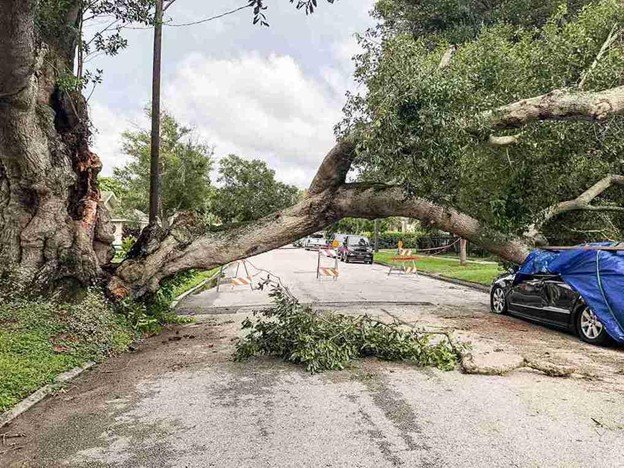
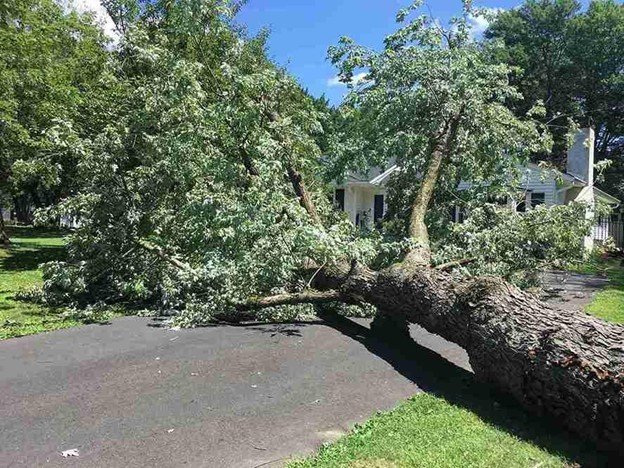
Northeast Ohio is no stranger to volatile weather. From the sudden, high-velocity “microbursts” of summer to the heavy, limb-snapping ice loads of a January lake-effect storm, Brecksville homeowners often wake up to a landscape that has changed overnight. When a tree on your property is damaged, the situation is usually a mix of high stress, safety concerns, and potential insurance headaches.
In our experience at All Seasons Tree Pros, more injuries occur after the storm during DIY cleanup than during the storm itself.
This guide outlines the immediate, professional-grade steps you should take to secure your property, manage your insurance claim, and determine if your damaged trees can be saved.
Step 1: Immediate Safety and “The 50-Foot Rule”
Before you grab a camera or a chainsaw, you must establish a safety perimeter. In the industry, we call this the “Target Zone.”
Identifying the “Hidden” Dangers
- Downed Power Lines: Never assume a downed line is dead. In Brecksville, many of our power lines are hidden by heavy foliage. If a tree has fallen, stay at least 35 feet away. Energy can travel through the wet ground or a chain-link fence. Contact FirstEnergy/Illuminating Company immediately.
- The “Hanger” or “Widow-Maker”: Look up. A branch that has snapped but is still caught in the upper canopy is a literal death trap. A slight breeze can dislodge it hours after the storm has passed.
- Tension and Compression: This is the most overlooked danger. If a tree is bent over or pinned under another tree, it is like a loaded spring. Cutting the wrong side can cause the trunk to “kick back” with enough force to be fatal.
Action: If a tree is touching your house or blocking a public road, evacuate the immediate area and call for emergency tree services right away.
Step 2: Documentation for Insurance (Before Cleanup)
In Brecksville, most standard homeowners’ insurance policies cover tree removal only if the tree has struck a covered structure (like your roof, garage, or fence). If the tree simply falls in your yard, you are often responsible for the cleanup costs.
How to Take “Insurance-Ready” Photos
Do not move any debris until you have documented the scene.
- The Wide Shot: Take photos showing the tree in relation to your house or the damaged structure.
- The Point of Impact: Close-up shots of where the limb or trunk struck the building.
- The Root Plate: If the tree is uprooted, take a photo of the roots. This helps prove that the failure was sudden (storm-related) rather than a result of long-term neglect.
- The “Pre-Existing” Proof: If the tree was healthy before the storm, photos of the green leaves or solid wood help your claim.
Step 3: Assessing the Damage: Can the Tree Be Saved?
Not every storm-damaged tree needs to be cut down. At All Seasons Tree Pros, we follow a strict “Arboricultural Triage” process.
The “50% Rule” for Canopy Loss
If a tree has lost more than 50% of its living branches, its ability to produce enough food (photosynthesis) to survive the following winter is severely compromised. In most cases, these trees should be professionally removed.
Crown Cleaning and Structural Pruning
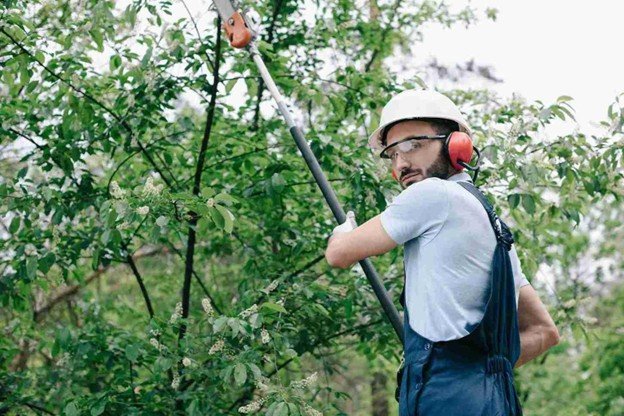
If the damage is limited to smaller limbs, the tree can likely be saved. We perform Crown Cleaning, which involves:
- Removing the “stubs” left by snapped branches.
- Making clean, surgical cuts at the “branch collar” to allow the tree to heal.
- Cabling and Bracing: If a major trunk has split but is otherwise healthy, we can sometimes install high-strength steel cables to hold the tree together while it recovers.
Step 4: The Danger of “The Guy with a Chainsaw”
After a major storm in Northeast Ohio, “storm chasers” often flood neighborhoods like Broadview Heights and Brecksville. These are typically out-of-state contractors with a truck and a saw but no insurance or local accountability.
Why Local Expertise Matters
- Liability: If an uninsured worker falls off your tree, your homeowners’ insurance is often liable for their medical bills.
- Proper Equipment: Storm cleanup often requires specialized rigging, cranes, and wood chippers.
- The “Topping” Trap: Unqualified workers will often “top” a damaged tree (cutting all the top branches off). This is illegal under arborist standards and eventually kills the tree, leading to a much more expensive removal a year later.
Always ensure your contractor is an ISA Certified Arborist and can provide a current certificate of insurance.
Step 5: Debris Management and Site Restoration
Once the immediate danger is gone, you are left with a massive amount of organic waste. Brecksville has specific regulations regarding yard waste and curbside pickup.
Turning a Crisis into an Asset
At All Seasons Tree Pros, we don’t just leave a mess. We offer:
- On-Site Chipping: We can turn your storm-damaged limbs into high-quality mulch for your gardens.
- Log Sectioning: If you have a fireplace, we can cut the trunk into manageable 16-inch “rounds” for you to split.
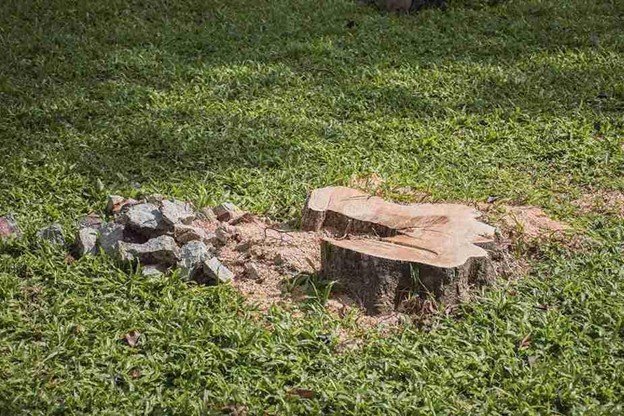
- Stump Grinding: If the tree had to come down, we can grind the stump immediately so you don’t have a reminder of the storm in your front yard.
Step 6: Preventing the Next Storm Failure
The best way to handle storm damage is to prevent it. Now that you’ve experienced a failure, it’s time to look at the rest of your canopy.
The “Storm-Proof” Audit
- Thinning the Canopy: Many trees fail because they act like a “sail” in the wind. By thinning the interior branches, we allow the wind to blow through the tree rather than against it.
- Health Assessments: We check for signs of internal rot or fungi that might make another tree a candidate for the next storm’s victim.
FAQ: Storm Damage Edition
Will the city of Brecksville remove a tree that fell from my yard into the street? Usually, the city service department will cut the tree back to the edge of the property line to clear the road. However, they will not remove the portion of the tree on your lawn; that remains the homeowner’s responsibility.
Does insurance cover “Prevention” pruning? Generally, no. Insurance is “reactive.” They pay for damage once it happens. This is why regular tree trimming is a vital part of home maintenance—it saves you the deductible and the headache of a claim later.
My tree is leaning after the storm. Can I pull it back up? Never. If a mature tree is leaning, the roots have snapped. Even if you “pull it back,” those anchor roots will not reattach. The tree is now a permanent hazard and must be removed.
Conclusion: Your Local Storm Response Partner
When the clouds clear and the damage is revealed, you don’t have to face it alone. All Seasons Tree Pros has been the trusted voice for Brecksville residents during every major weather event for years. We understand the urgency, the insurance requirements, and the biology of our local trees.
Do you have storm damage that needs an expert eye? Don’t risk your safety with a ladder and a hand saw. Contact us now for an Emergency Hazard Assessment and let us help you restore your property safely and professionally.